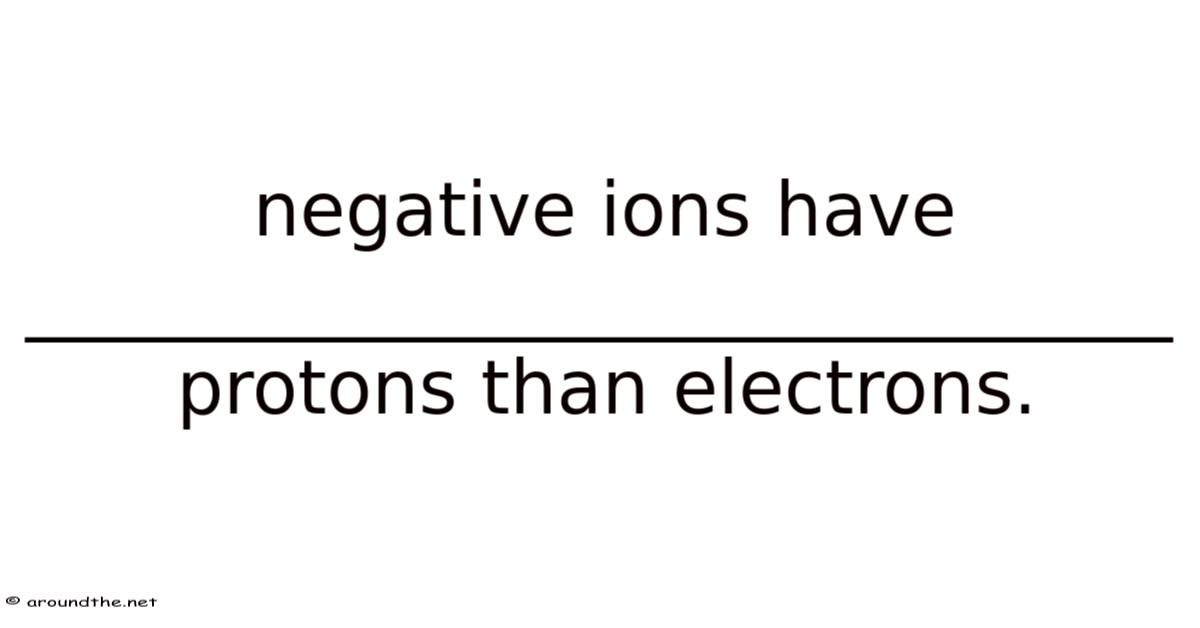
Negative ions have more electrons than protons.
Wait, let me rephrase that. Negative ions have more electrons than protons.
That’s the core of it. But here’s what most people miss — and why this simple fact matters more than you think.
When we talk about negative ions, we’re really talking about charged particles that carry an extra electron. But when an atom gains an electron? It’s basic chemistry, sure. Day to day, that imbalance gives it a negative charge. Most atoms naturally have an equal number of protons and electrons. Suddenly, it’s got one more electron than protons. But in practice, this tiny shift explains why negative ions behave so differently in the air, in water, and in our bodies.
What Is a Negative Ion?
A negative ion — also called an anion — is an atom or molecule that has gained one or more electrons. Which means this makes it negatively charged compared to the surrounding environment. Even so, think of it like a seesaw with an extra weight on one side. The extra electron tips the balance Practical, not theoretical..
Most common ions you encounter daily are oxygen, nitrogen, and water molecules that have picked up an extra electron from environmental sources like sunlight, electrical fields, or even volcanic activity. Day to day, when these molecules gain electrons, they become negatively charged air ions. And yes, that means they have more electrons than protons.
It sounds simple, but the gap is usually here.
Why Do Negative Ions Matter?
Here’s the thing — negative ions aren’t just lab curiosities. They’re everywhere. Day to day, from the mist off a waterfall to the air around electrical appliances, negative ions are constantly bombarding us. And they do something remarkable: they affect how we feel.
Studies show that exposure to negative ions can reduce stress, improve mood, and even help with seasonal affective disorder. That’s not magic. That’s chemistry. When negatively charged air molecules hit our respiratory system, they trigger biochemical changes that influence serotonin levels. Now, the result? Better mood, clearer thinking, and sometimes, better sleep That's the part that actually makes a difference..
But it’s not just about feeling better. In practice, negative ions also have real-world applications in air purification, water treatment, and even medicine. In hospitals, for example, negative ion generators are sometimes used to reduce airborne pathogens. The ions stick to viruses and bacteria, pulling them out of the air so they can be washed away or filtered out Easy to understand, harder to ignore..
How Do Negative Ions Form?
Let’s break this down.
Negative ions form when a molecule gains an electron. Electrons are negatively charged particles, so adding one to a neutral atom gives it an overall negative charge. The number of protons stays the same — that’s what defines the element. But the electron count changes, and with it, the charge.
This usually happens through several pathways:
-
Friction and separation: When materials rub together, electrons can be transferred from one surface to another. Think of walking across a carpet and then touching a metal door — zap. That’s static electricity. In nature, this happens with water droplets, dust particles, and even plant leaves.
-
Radiation and energy: High-energy sources like UV light or X-rays can knock electrons loose from one molecule and transfer them to another. This is how many negative ions form in the atmosphere.
-
Electrical fields: Strong electromagnetic fields can induce electron transfer. That’s why devices like ionizers and even some types of air purifiers generate negative ions — they use electrical energy to pull electrons onto air molecules The details matter here..
So when you see a sign saying “negative ions” on a product, what it’s really saying is “this thing adds extra electrons to the air around you.” And those extra electrons make the air more charged, more reactive, and — in many cases — more beneficial.
Where Are Negative Ions Found?
You’d be surprised how many places have high concentrations of negative ions.
Waterfalls and flowing water naturally generate them. Consider this: the mist created by falling water carries millions of negative ions into the air. That’s why people often report feeling refreshed after visiting a waterfall or standing near a rushing stream.
Lightning is another major source. Practically speaking, during a thunderstorm, the friction between air masses knocks electrons loose, creating massive bursts of negative ions. Some studies suggest that the surge of negative ions after a storm contributes to the “clear-headed” feeling people get after rain.
Indoor environments also produce negative ions. Some air purifiers and ionizers are designed specifically to boost indoor negative ion levels. photocopiers, computer monitors, and even plants release ions as a byproduct of their operation. And yes, that includes products marketed as “negative ion generators” or “air cleansers with bipolar ionization.
Common Mistakes People Make
Here’s where it gets interesting. This leads to most people think negative ions are some kind of gimmick. Or worse, they confuse them with ozone generators Nothing fancy..
Ozone (O₃) is a molecule made of three oxygen atoms. Worth adding: it’s heavy, toxic, and bad for your lungs. Some cheap air purifiers claim to use ionization but actually produce ozone as a byproduct. Think about it: that’s dangerous. True negative ion generators don’t create ozone — they just add electrons to existing air molecules.
Another mistake is thinking more negative ions are always better. In fact, too many ions in enclosed spaces can be irritating. The sweet spot is moderate exposure — like what you’d find near a waterfall or in a well-ventilated room with a quality ionizer.
And here’s a subtle one: people often think negative ions only come from nature. Not true. Day to day, they’re generated by electronics, water flow, sunlight, and even human movement. Your body produces them too, through friction and metabolic processes.
What Actually Works
If you want to harness the benefits of negative ions, here’s what actually works:
-
Visit natural settings: Waterfalls, beaches, and forested areas naturally have high negative ion levels. Even a shower can help — the mist carries ions into the air around you Less friction, more output..
-
Use a quality ionizer: Look for devices certified by organizations like the Environmental Protection Agency or the California Air Resources Board. Avoid anything that mentions “ozone” or “ionized oxygen.”
-
Let plants help: Certain houseplants, like spider plants and peace lilies, release negative ions as they photosynthesize. They’re not a replacement for an ionizer, but they help That's the whole idea..
-
Improve ventilation: Open windows, use fans, and keep air moving. Stagnant air has fewer ions. Fresh air, especially from outdoors, tends to have more.
-
Avoid over-amping: Don’t sit in front of an ionizer for hours. Moderate exposure is key. Your body adjusts — and too much can backfire.
FAQ
Q: Can negative ions help with anxiety?
A: Some studies suggest yes. Exposure to negative ions has been shown to reduce cortisol levels and improve mood. But it’s not a cure-all. It works best as part of a healthy lifestyle.
Q: Are negative ions harmful?
A: No, when used properly. In fact, they’re generally safe. The concern is with ozone-producing devices, which are different. True negative ions don’t create harmful byproducts.
Q: How long does it take to feel the effects?
A: Some people notice a difference within minutes. Others need 15–30 minutes of exposure. It varies by individual and environment Not complicated — just consistent..
Q: Can I generate negative ions at home?
A: Yes. A good ionizer, houseplants, or even a running fan can increase negative ion levels. Just make sure the device is safe and ozone-free That alone is useful..
Q: Do negative ions kill viruses?
A: They can help reduce viral load in the air by clumping particles together so they’re easier to filter out. But they don’t kill viruses directly. Think of them as a helper, not a weapon.
The Bottom Line
Negative ions have more electrons than protons. Think about it: that’s the science. But it’s the real-world effects that matter Simple, but easy to overlook..
From mood enhancement to air purification, negative ions play a quiet but powerful role in our daily lives. In real terms, they’re not a cure for everything. They’re not a magic bullet. But they’re a simple, natural tool that can make a difference Not complicated — just consistent. Turns out it matters..
So next time you’re near a waterfall, or you turn on your ionizer, or you just open a window on a sunny day — remember: you’re not just breathing air. And you’re breathing charged particles, one extra electron at a time. And that small shift? It can make a big difference.
